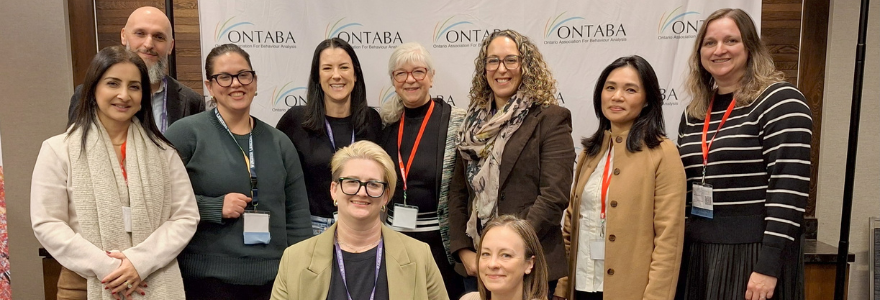
Students and faculty members from Western Education's EdD in Applied Behaviour Analysis at the Ontario Association for Behaviour Analysis conference.

Students and faculty members from Western Education's EdD in Applied Behaviour Analysis at the Ontario Association for Behaviour Analysis conference.
Little more than a year after the creation of Western Education’s EdD in Applied Behaviour Analysis, both students and faculty were well represented at the leading annual conference for behaviour analysts in Ontario.
Twenty students and five faculty members authored submissions at the Ontario Association for Behaviour Analysis (ONTABA) conference from November 6-7 in Toronto sharing their research as featured speakers or as part of the poster presentation.
“With the program entering it’s second year, it’s a wonderful achievement to see so many of our students producing work that is already being presented at conferences,” said professor Albert Malkin, coordinator of the EdD in Applied Behaviour Analysis.
“Students presented original work developed in the program and collaborated with faculty to generate important research on diverse topics, from skills-based treatment for children and adolescents and burnout in the profession, to a musical rendition exploring model dependent realism as a path toward foundational philosophical progress in the field.”
Ashley Rodrigues, MA candidate in School and Applied Child Psychology, was selected as the recipient of the poster award for her research titled “How ADHD, ASD, dating violence, and perspective-taking interact: A cross-group comparison".
Rodrigues’ poster examined how neurodevelopmental differences intersect with social cognition and relationship experiences, highlighting the complex ways in which perspective-taking relates to vulnerability across groups.
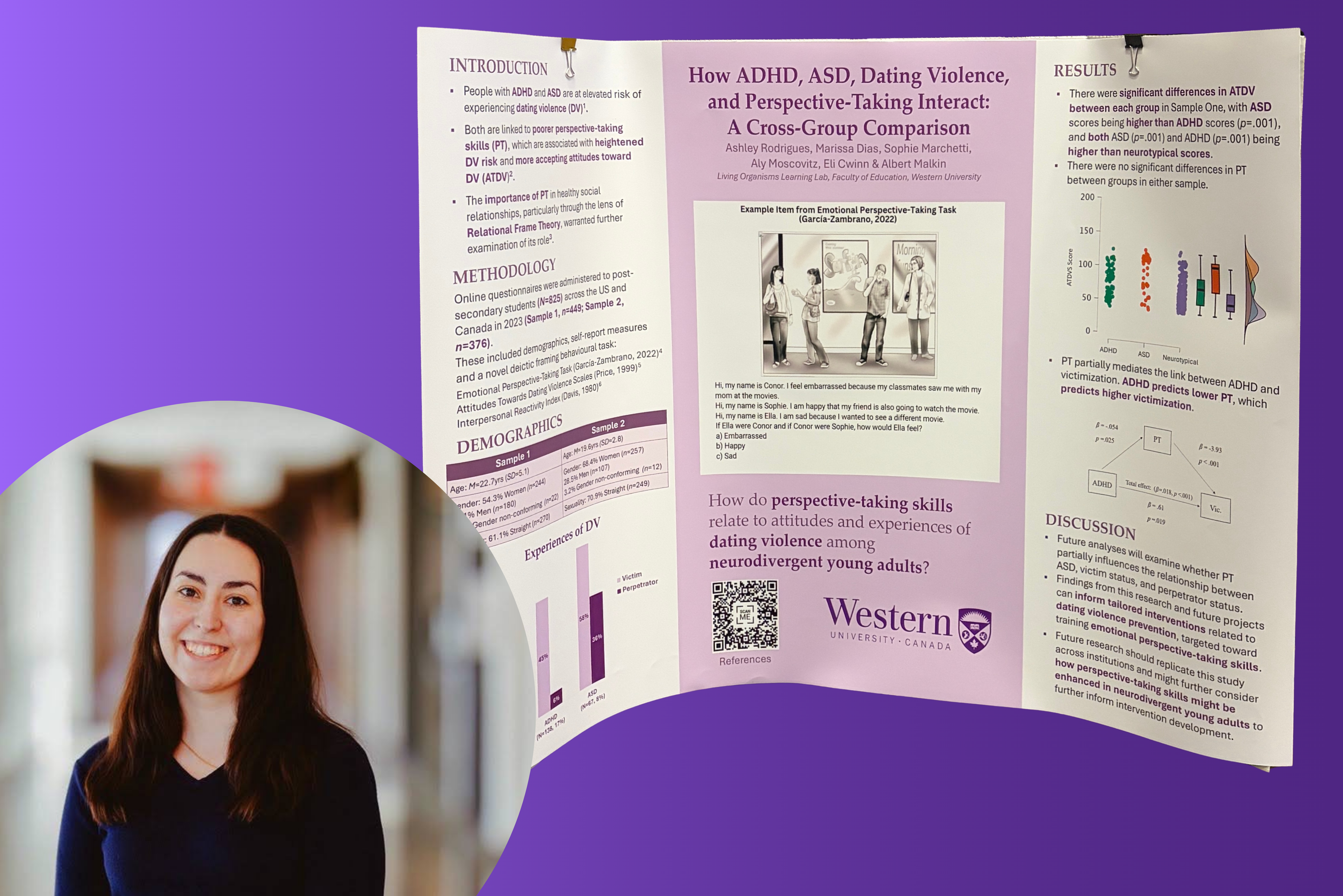
Photo: Ashley Rodrigues and her award winning poster.
“Winning the poster award at the ONTABA conference felt incredible, especially considering I'm in the first semester of my MA program and I've been recognized for my research this early in my graduate school journey,” reflected Rodrigues.
“This recognition has also underscored the importance of continued efforts to address the social vulnerabilities faced by neurodivergent people. It has made me even more passionate about continuing this line of research.”
EdD in the Field of Applied Behaviour Analysis candidate Pamela Shea was also recognized as the recipient of the teaching award for her work as professor for the Bachelor of Behavioural Psychology program at St. Lawrence College, where she aims to support students to develop into compassionate clinicians who support diversity and equity.
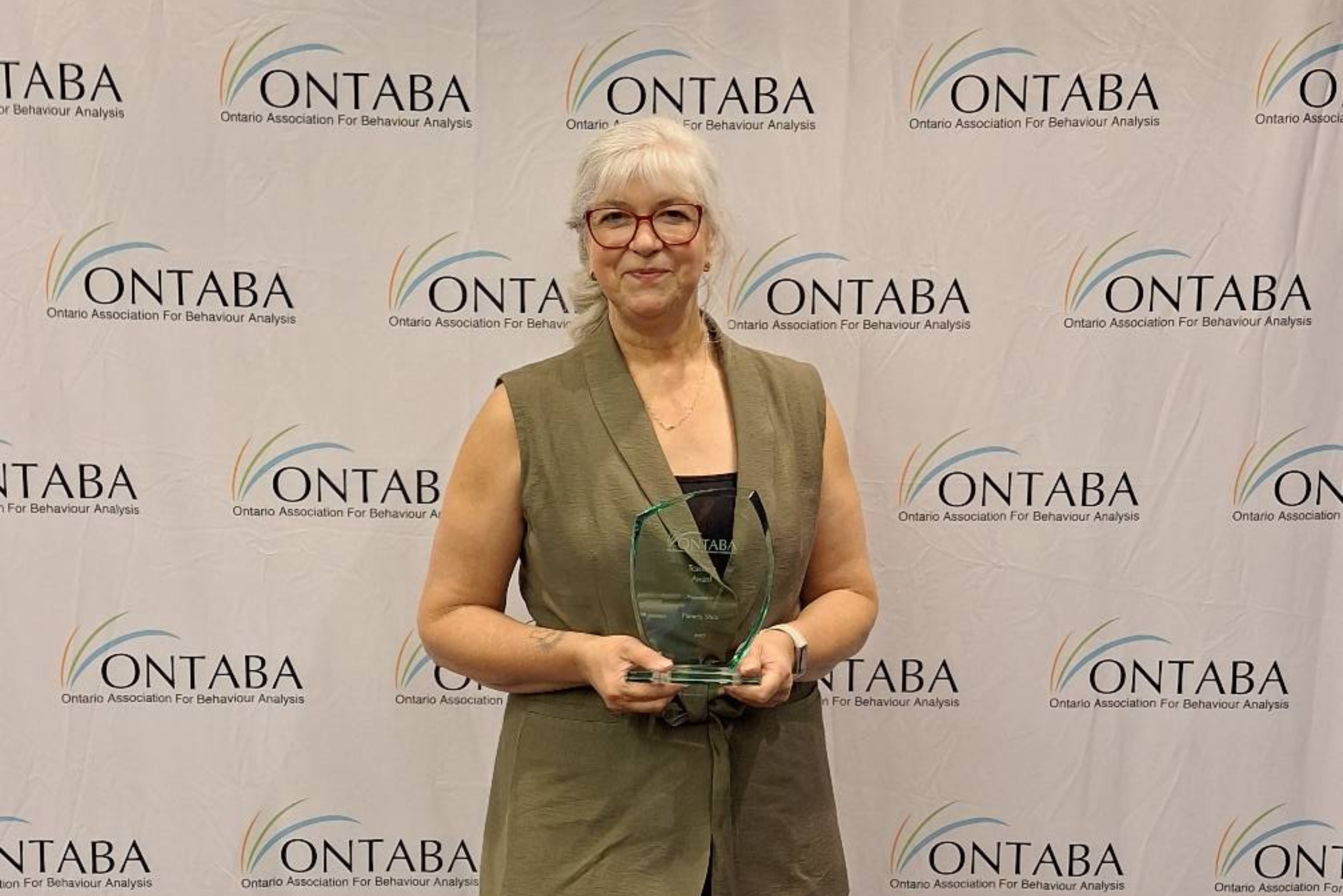
Photo: Pamela Shea with her ONTABA Teaching Award.
“I was deeply honoured to receive the ONTABA Teaching Award. Supporting the development of future behaviour analysts is a profound responsibility, and I am grateful for the opportunity to contribute to the growth of ethical, skilled and compassionate professionals,” said Shea.
“This recognition reflects the collective efforts of my exceptional students, dedicated colleagues and valued community partners, as well as the ongoing guidance I have received from the many mentors and professors who continue to shape my learning.”
During the conference, professor and associate dean of research Nicole Neil and EdD candidate in Applied Behaviour Analysis Taylor Dayton both committed to joining the ONTABA board as treasurer-elect and director-at-large, respectively.
For Neil, the conference was a welcome opportunity to connect with practitioners, academics and students and learn about emerging research and future opportunities in applied behaviour analysis. She is proud to play a role in influencing the future of applied behaviour analysis through her role as board treasurer.
“It was great to see the conference have such a large attendance this year. The field was recently established as a regulated health profession in July of last year, so it was good to celebrate that achievement and the work happening as we transition into this new space,” said Neil.
“For me, it’s extremely important to serve our field and to have a voice in how we are representing ourselves to the public, how we think about the future of our work and advocate for policy that affects the future of our profession.”
Dayton was grateful for the opportunity to engage directly with peers and experts and to see current research in action, bringing course work to life. As both a practitioner and a doctoral student, she is excited to join ONTABA’s board understanding how the field benefits from strong professional leadership, advocacy and community engagement.
“I wanted to join the ONTABA board because I believe strongly in advancing high-quality, ethical and compassionate behavior analytic services in Ontario,” said Dayton.
“The organization brings together passionate clinicians, researchers, educators and students who share a common goal–to improve the lives of individuals through thoughtful, responsible and inclusive behavior analytic work. Being part of that mission is incredibly rewarding.”
The strong showing reflects Western's growing reputation in behaviour analysis across its graduate programs.